Cycling picture

Ride2School DIY - The 15 easy steps

About this page

You don’t need hands-on help from a Ride2School Coordinator to get more students walking and riding at your school. Just follow some or all of the following 15 easy steps…

Step 1: Register in the Ride2School program. Registration includes a quick survey about walking and riding at your school. Registered schools receive our monthly e-newsletter Behind the Bike Shed, with all the latest news from our program, plus a copy of Bicycle Victoria’s glossy RideOn Magazine every two months.

Step 2: Audit. Complete an audit of your school’s current active travel situation. E.g. how many students currently walking, riding, and coming by public transport and car.

Step 3: Identify the Barriers that are preventing more students walking and riding at your school. Is a lack of bike parking, the distance students must travel, parents' safety concerns, or some other issue the barrier? Develop creative strategies to work around your barriers.

Step 4: Monitor active travel rates at your school using the ‘Hands-Up’ survey. You’ll be sent a reminder each month now that you’re registered. Measuring your school’s active travel rate is the key to the program as it allows you to gauge your success. Prizes are awarded each month for different Hands Up! categories. We compile all the data each month and use it to lobby government for more support for Ride2School

Step 5: Promote your school’s commitment to Ride2School to students, parents and teachers. Report Hands Up! results in assemblies and in the newsletter. You can also download newsletter inserts about the health, congestion and environmental benefits of walking and riding to school. You can even download a simple Ride2School Presentation to promote the benefits of walking and riding to school in class or at assembly.


Step 6: Empower student leaders to promote riding and walking. Let them take responsibility for doing the Hands Up! surveys and submitting the results. Encourage them to organise events like National Ride2School Day, care-take the bike shed, or even form a student bike club.


Step 7:  Organise a National Ride2School Day event. The annual National Ride2School Day is in March each year but some schools hold one every term or even every month. Student leaders or the student bike club are ideal organisers. Hold a poster competition, go around to classes to promote the day, ask local police to give a safety talk and engrave bikes on the day, or ask the local bike shop to offer prizes. Invite parents to ride or walk with the children on the day and hold a special assembly.


Step 8: Set Goals and Targets for your school to aim for. The estimated current national average for active travel to school is 20%. Many schools in our program are regularly getting 50% or more of their students walking and riding. What will your school aim for?

Step 9: Offer incentives for students to walk and ride. One option is a laminated Frequent Rider Passport attached to a lanyard which gets punched every day students walk or ride. A fully clipped passport can be exchanged for rewards or prizes. Other options include ‘Bike Seat Lotto’ where a random prize voucher is hidden under a bike seat, or an Active Travel Trophy that goes to the class with the most walkers and riders each month.

Step 10: Deliver Bike Ed to improve students' riding and safety skills and their knowledge of road rules. It will also lift the profile of cycling in the school, increase rider numbers, and help meet parents' safety concerns. Bike Ed volunteers are being trained by Ride2School to assist throughout Victoria in delivering Bike Ed. We are also trialing the delivery of Bike Ed through the Active After Schools Program. Ask us if there are volunteers near you (03) 8663 8888.

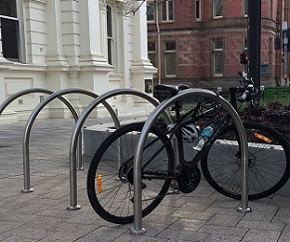
Step 11: Build or upgrade bike parking. Having somewhere suitable to store bikes is critical. Aim for bike parking for a minimum of 10% of the student population. Summer overflow parking, especially during Bike Ed, should aim for 20%. Some schools need secure and covered storage, others just need good rails. Check out all our web pages on bike sheds and funding.

Step 12: Develop Quiet Neighborhood Routes to school. Observe student travel, obtain a student population ‘Dot Map’, and enlarge a Melways map in order to plan local routes to your school. Walkers and riders prefer quieter routes than drivers, and don't forget that children 12 years and under can ride on footpaths, as can accompanying adults. Ask local council to implement any necessary road works, and promote the route to parents and students. Identifying quiet neighborhood routes to your school can help develop community confidence that children can walk or ride to school.

Step 13: Connect with your local community. Inform the local bike shop about your program and ask them to offer your students a discount. Ask the local Police Youth Resource Officers to give a safety talk. Contact your local council's active transport officer and see what they can offer. Speak to the local press and tell the world what you’re up to and how they can get involved.

Step 14: Integrate active travel into the curriculum. Use our Ride2School curriculum materials and Hands Up! worksheets which have been developed in line with the Victorian Essential Learning Standards. Ride2School offers lots of great opportunities for classroom learning and will reinforce the message about walking and riding.

Step 15: Maintain the momentum you have created. Continue to promote riding to school at every opportunity. Monitor your success using Hands Up! surveys and feed the results back to the school community. Aim for continuous improvement and try to meet your targets. Celebrate your achievements with a riding school excursion or 'Tour De Suburb' and send us stories and images of what you’re up to so we can inspire other schools to follow your lead.


Support the people who support your bike riding. Join Bicycle Victoria.